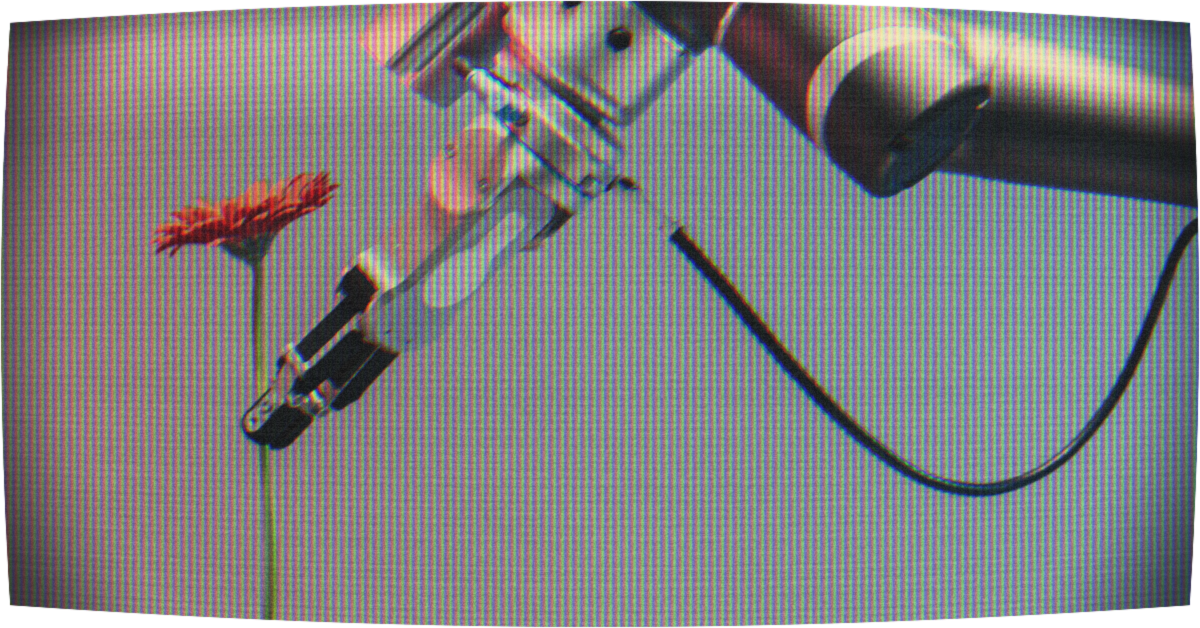
For centuries, technological advancements have redefined human potential by amplifying our physical abilities through sophisticated tools. Today, state of the art operating rooms feature multimillion-dollar teleoperation consoles where surgeons perform delicate procedures with incredible dexterity. Across global supply chains, automated robotic arms sort, pack, and move goods at unprecedented speeds. Yet, despite these remarkable feats, modern robotics faces a fundamental limitation: an over-reliance on visual guidance in a physical world built for touch.
Advanced image sensors and computer vision allow machines to map their surroundings, while powerful AI architectures serve as digital brains for reasoning. However, computer vision alone cannot tell a robot how firmly to grasp an object, whether a surface is slipping, or how delicate tissue responds under pressure. This lack of rich tactile data leaves robotics in a critical state of sensory deprivation—a haptic gap.
To transition autonomous systems from structured environments to versatile, real-world execution, machines must learn to feel. ForceN is bridging this haptic gap by digitizing the sense of touch—equipping autonomous platforms with the localized physical intelligence required to scale physical AI across industries.
A Surgical Origin
In 2015, Robert Brooks was working on his PhD at the University of Toronto, under the supervision of the head of neurosurgery at Sick Kids. His research gave him a front row seat to some of the first surgical robotics in use, created by pioneers like Mazor (acquired by Medtronic in 2018) and Mako. These minimally invasive systems were able to identify hard tissues such as bone to be used as a reference point for delicate surgical procedures like bolt-on hardware placement around spinal cords and fine milling for knee surgeries, achieving a level of dexterity that was previously only available in open surgery.
At the time, 2D and 3D ultrasounds, OCT, structured light systems, and contrast agents were augmenting the human eye in teleoperations. Brooks saw the same thing possible for touch. Not merely the recreation of human levels of sensitivity but a way to magnify that sense the way other advancements had for vision.

“A lot of the problem with surgical robotics at the time was that even with the increased dexterity compared to laparoscopic, they lacked the tactile feedback that human surgeons relied upon to discern tissue density, puncture resistance, and delicate vascular anatomy.” - Robert Brooks, Founder, CEO
ForceN, then known as SensOR Medical, began as the answer to this unmet clinical need. The breakthrough came with ForceFilmTM, a paper-thin transducer technology capable of maintaining stability over long procedures—a critical necessity where taking an instrument out of a patient to re-zero a sensor is not an option. By rethinking haptics from the ground up, Brooks created a sensor with seven times the sensitivity of the human hand. The judges took note; Brooks and his co-developer took home the 2017 Canadian national James Dyson Award for their ForceFilmTM technology, giving the team early-stage validation and momentum.
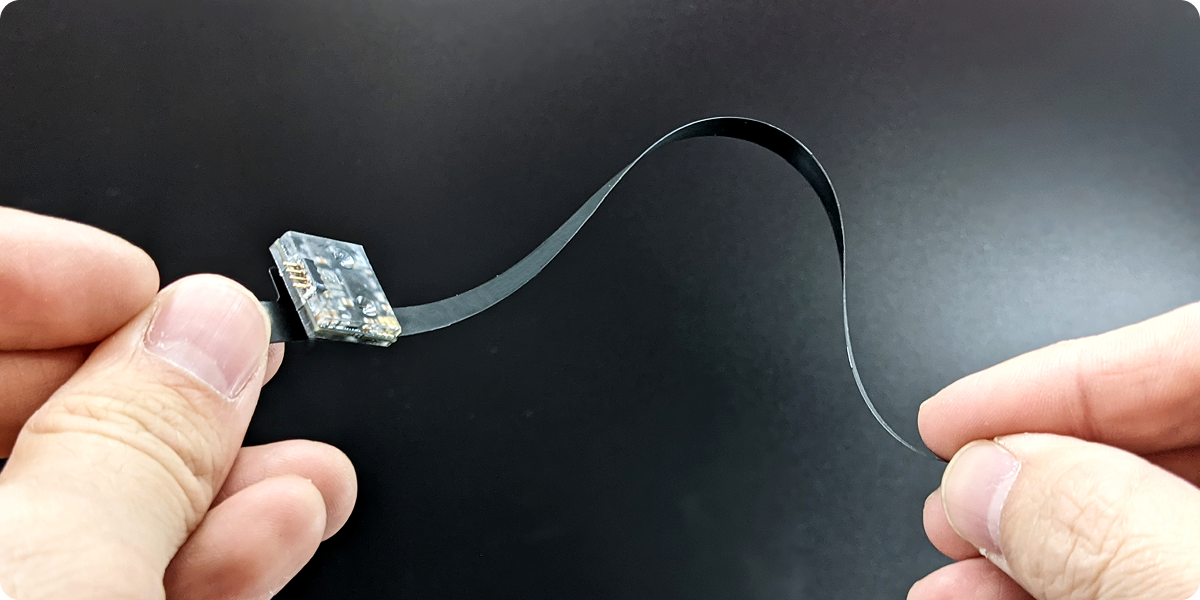
Originally designed directly into instrumentation, with few electronics at the front end to capture sensor readings, the value of ForceFilmTM became readily apparent to organizations like Boston Scientific. Up until that point, everything was trained by apprenticeship, learned over time as a right of passage. For surgical robotics companies, understanding the forces in teleoperation surgery created a baseline of what would become the answers to the question of what good robotic surgery looks like. By capturing this elusive data, the exact physical force required to safely manipulate tissue could be quantified, recorded, and standardized.
In 2019, SensOR Medical (rebranded as ForceN) raised its first round of funding and focused on industrializing its ForceFilmTM technology. Brooks fortified his founding team with top-tier talent in material science, mechatronics, firmware, and product design, rooting the company in an engineering-first culture. As interest grew in the clinical applications for ForceFilmT M and ForceN’s sensor technology, COVID-19 changed the world. Clinical studies halted and new surgical robotics were no longer being introduced into hospitals – the future was put on hold.
Scaling Beyond the Scalpel
ForceN was already supporting the clinical needs of lab technicians, reusable grippers for lab work and testing were designed and built to manipulate fragile lab glassware. Disposable manipulators were unsustainable as the demand for testing increased. Reduced staffing, social distancing, and a widespread pathogen (COVID-19) required tools that could withstand sterilization while being gentle enough to not damage other equipment during the prolonged supply chain shortage - a perfect fit for ForceN’s ForceFilmTM technology.

While sitting on their collective couches, as so much of Canada was being asked to do at the time, the team at ForceN noticed the same technology could apply to other industries - essential industries that needed to move quickly. As featured in an Autodesk Design&Make article, the team put their experience building medical systems to use when called upon by Warren Ali, VP of innovation at Auto Parts Manufacturers’ Association (APMA). Canadian ventilator manufacturers were facing unknown supply chain timelines for much needed pressure sensors.
The logistics industry was facing a similar increase in demand with reduced staffing. Believing that not only would you not go back to work in offices, but you wouldn’t go back to the grocery store, either. However, groceries are less predictable than lab work. A robot might know exactly where an object is using its camera system, but without any tactile feedback, wouldn't know how to handle it. Crushed and bruised produce, broken lightbulbs, hard-cover books missing their jackets, only one shoe picked, and double picking smaller items were common logistics issues with visual only guidance. Using the learnings from systems built for lab work, ForceN helped develop an end-effector to pick and pack delicate groceries - even sashimi in Japan.
In 2021, Amazon Robotics introduced Robin (Robotic Induction) to identify, move, and sort millions of parcels, representing a significant milestone in vision-based robotic manipulation and sorting. Looking to find similar efficiency in the manipulation of millions of SKUs of irregularly shaped products, Amazon unveiled Sparrow in late 2022. Sparrow effectively addressed the SKU challenge through dynamic pressure application based on the texture and weight of each SKU. But the haptic gap wasn't just a problem for fragile goods; it was stalling heavy-duty logistics as well. In early 2021, Pickle Robot entered the logistics space. Unlike Amazon’s Robin and Sparrow, Pickle’s Dill operates in trailer environments alongside humans where unpalletized shipments are unloaded into a facility. In these constantly shifting environments, robots need the physical intelligence to feel out dynamic loads and safely sustain processing speeds of up to 1,800 packages an hour.
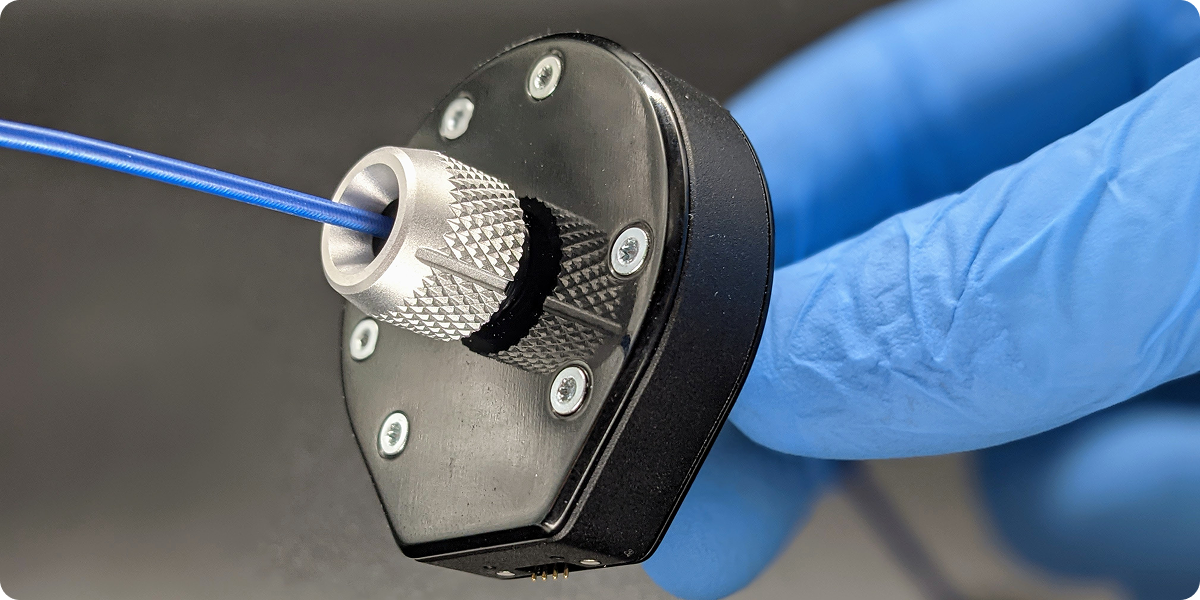
Scaling to meet the demand of the logistics industry required solidifying the underlying technology and communication protocols, ForceN added RS-232 and Ethernet connectivity to meet the standards of the industry. As the underlying sensor technology matured in the industrial sector, the surgical industry renewed its push for tactile integration. Asensus had just secured expansive FDA clearance for its Senhance system in general surgery. By integrating haptic feedback into 3mm instruments, surgeons could work with the same tacit knowledge used in open surgery, while leveraging the high-definition dexterity inherent to robotic platforms. As part of a broader evolution toward global surgical safety, the expansion of their Senhance platform into markets like Japan highlighted a worldwide demand for systems that fuse tactile intelligence with 3D visualization. This demand extended beyond general surgery into highly specialized procedures to applications in cataract surgery, guide-wire and catheter placement, and improved tissue-drill contact detection. A transformation of the medical device industry was underway.
Resolving data was the next challenge which led to the transition from load cell and sensor capabilities to a finalized sensing solution designed to be adaptable to applications beyond surgical and logistics.
Failing Safely
Back in 2022, pre AI boom, robotic intelligence relied heavily on reinforcement learning. Traditional sensors often break when a robot collides with its environment, yet reinforcement learning requires the freedom to bump, nudge, and experiment. ForceN solved this physical intelligence bottleneck with their patented DedicatedOverloadTM architecture, turning failure into data and mistakes into improvement. Decoupling sensing from the overload protection adds multidimensional protection that locks out when the sensing beams are overloaded. By surviving thousands of full-speed collisions without losing a fraction of its sensitivity, ForceN engineered a way for machines to fail safely.
.gif)
By 2023, as ForceN continued to scale its operations and secured ISO 9001 certification, its sensors were capturing force data at up to 2,500 times a second (2.5kHz). Streaming that massive volume of raw force data directly to a robot’s central processor, or a cloud hub, created latency. The ForceN team looked at the growth of Large Language Models (LLMs) and saw an opportunity to apply similar data-processing philosophies to physical force data, leading to the creation of SynapTMedge intelligence. By pre-calibrating and refining data right at the point of contact, the sensor only sends the most critical, actionable insights to the robotic "brain." It’s no longer just about giving a machine a sense of touch—it’s about giving it the localized physical intelligence to react to the world in a fraction of a millisecond. ForceN introduced a series of edge algorithms including WeighMotion - which compensates for vibration and inertial effects and measures the true package mass in motion. Other algorithms measure contact and slip, and an estimation of the trajectory of an object released in motion - like plastic bottles into a recycling bin.

“We [ForceN] aligned our design philosophy early on with adaptability across industry to avoid having to re-engineer our systems for each vertical.” - Roberto S. Enkerlin, VP of Product
Today, onboard edge computing is standard across ForceN sensors. Instead of forcing the robot’s main processor to constantly monitor every micro-fluctuation in force, SynapTM edge intelligence processes the data locally to send the most important insights directly to the robotic brain/hub the same way our brain processes tactile feedback and creates our reflex reactions for edge cases of large temperature differentiation without continually monitoring the temperature of everything around us. A hot coffee cup or tray of cookies creates a reflex to put it down quickly, while the temperature differential between our hand and our shoe results in no reflexive action when we pick it up.
The Future of Physical AI
Visionaries are pouring billions into creating bipedal machines that can navigate unpredictable environments and perform the labor we find dangerous, dull, or beyond the physical limitations for a human. This is where the convergence of digital AI and physical sensing reaches its absolute apex. The commercialization of general-purpose humanoid robots depends on providing reliable hardware that can scale, and paving the path toward Physical-AI with a rich, high-quality tactile vocabulary. It is the critical infrastructure required to unlock mass-scale automation across every physical industry on the planet.

Companies like Tesla Optimus and Figure AI are not just building cool hardware; they are engineering the ultimate platform for Vision-Language-Action (VLA) models. These multimodal AI architectures train on vast amounts of data to integrate computer vision, natural language processing, and motor control. But a humanoid designed to work in a factory, operate heavy machinery, or fold laundry in your living room cannot rely on cameras alone. The machine must possess distributed touch perception. It requires the localized physical reflexes to instantly detect when a surface slips, when an object yields, or when structural resistance is met. Without robust, high-fidelity force and torque sensing, a multimillion -dollar humanoid is just an incredibly expensive and dangerous, uncoordinated appliance.

"Great physical AI relies on robust hardware. As technology advances, our team is committed to developing sensors that provide the rich, actionable data needed to fuel VLA models and propel the humanoid space forward." - Samuel Kim, VP of Engineering
When companies deploy ultra-sensitive, edge-computed force transducers into surgical systems, or when industrial giants integrate tactile arrays into their assembly lines, they are doing more than upgrading hardware. They are quietly building an insurmountable data fortress. By outfitting robots with the ability to measure mechanical forces and contact geometry in real-time, tacit knowledge is being digitized. Every successful grasp, subtle adjustment in grip, and safe collision generates physical training data. This data is the safety net required to train the next generation of Physical AI that will exist within our personal space.
From the surgical operating theatre, to logistics supply chains, to the space stations and nuclear reactors of tomorrow where robots perform the impossible, ForceN’s sensing solutions are bridging the haptic gap for the future of physical AI.